
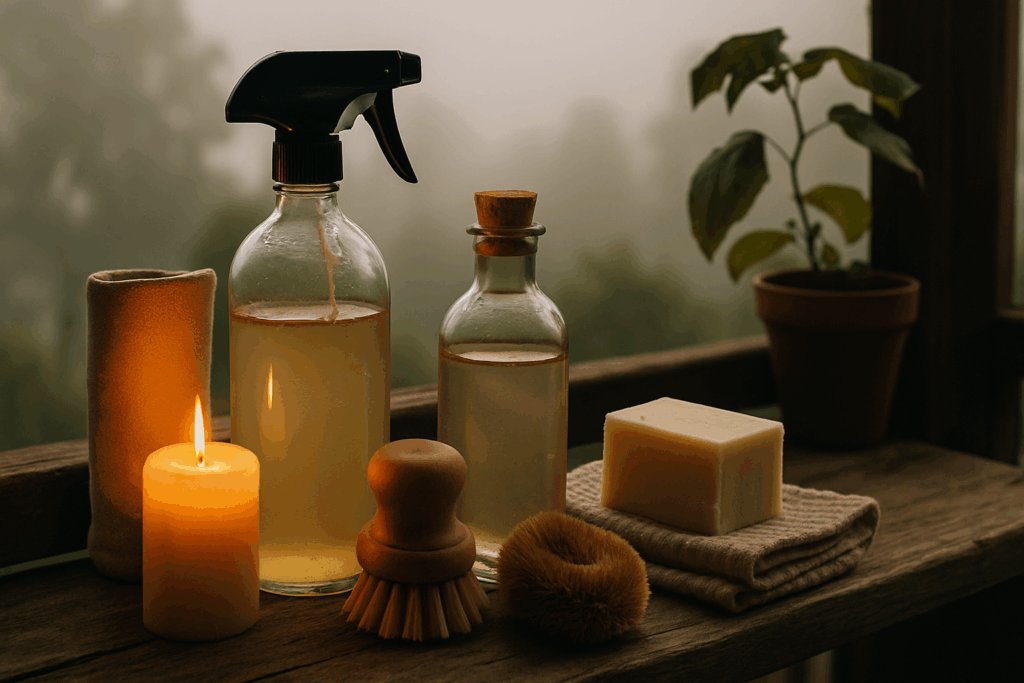
Why Your Cleaning Products Matter
A cleaner home doesn’t always mean a healthier one especially when it comes to the products you use. Many conventional cleaning supplies contain chemicals that may be effective at removing dirt, but they often come with hidden costs for your indoor air quality and long term health. Understanding what you bring into your home is the first step toward a greener routine.
The Indoor Air Problem
Conventional cleaning products can release volatile organic compounds (VOCs), synthetic fragrances, and other hidden toxins that linger in the air long after you’ve finished scrubbing.
VOCs can cause headaches, dizziness, or long term respiratory issues
Common offenders include aerosol sprays, bleach based cleaners, and disinfectants
Poor ventilation makes these effects worse especially in small spaces like bathrooms or apartments
Green Doesn’t Always Mean Clean
Just because a product claims to be “green” or “natural” doesn’t mean it’s safe or eco friendly. Many labels are marketing driven and not based on standardized criteria.
No federal regulation defines what makes a cleaner “natural” or “non toxic”
Greenwashing is common brands may highlight one safe ingredient while hiding others
Fragrance free doesn’t always mean synthetic free check the ingredient list
How to Choose Better
You don’t need to become a chemist to shop smarter. A few simple strategies can help you make more informed choices:
Read the ingredient list look for known irritants like ammonia, chlorine, or synthetic fragrance
Choose third party certifications like EcoLogo, Green Seal, or EPA Safer Choice
Go DIY mixing your own cleaners with vinegar, baking soda, and essential oils gives you full control
Transparency matters brands that fully disclose ingredients are generally more trustworthy
Making the switch to greener cleaners doesn’t have to be overwhelming. Start with one product, read the label, and choose a safer option. Over time, small swaps add up to a noticeably healthier home.
Ditch the Disposable: Reusables That Work
Swapping out disposables for durable alternatives is one of the easiest ways to create a greener cleaning routine. Not only does it reduce waste, but it also saves money over time. Here’s how to start:
What to Swap First
Cloth Rags Instead of Paper Towels
Choose machine washable cloths for everyday spills and surface cleaning. They’re absorbent, reusable, and significantly cut down on paper waste.
Microfiber Mop Pads Over Single Use Pads
Microfiber pads can be washed and reused dozens of times. They’re just as effective if not more so at grabbing dust and grime.
Refillable Spray Bottles
Ditch disposable plastic cleaning bottles. Glass or BPA free plastic spray bottles can be refilled with your own cleaning solutions, or eco friendly concentrates.
Why It Matters
Less Household Waste
Switches like these help cut down on landfill bound waste in everyday life.
Cost Effective Over Time
While reusables may require a small initial investment, they pay off quickly by reducing the need to constantly restock disposable items.
Supports a Low Waste Home
Small, consistent changes help align your cleaning habits with a more sustainable lifestyle.
Making just a few of these swaps can set the foundation for a more eco friendly routine that’s both practical and planet conscious.
Smarter Swaps for Everyday Cleaners
Vinegar and baking soda are the bread and butter of natural cleaning. Together, they tackle grime, deodorize, and even break down minor clogs without the nose burning side effects of commercial formulas. No hazmat gloves needed. While their fizz is impressive, don’t expect magic on mold or heavy grease. But for everyday mess? They win.
Want it to smell less like a salad? Essential oils like lemon, eucalyptus, or lavender can shift the whole vibe. Just a few drops and you’ve got a cleaner that doesn’t assault your senses. Plus, some oils bring cave tested antimicrobial power to the table.
Then there’s castile soap. This plant based, all purpose soap is woefully underrated. You can clean counters, dishes, bathrooms, even pets, all with one bottle. It’s concentrated, so a little goes a long way. Mix it with water and a bit of oil or vinegar, and you’ve got half your home covered.
For a go to DIY all purpose spray: combine 1 cup water, 1 tablespoon castile soap, 1 tablespoon vinegar (optional), and 10 drops of your favorite essential oil. Shake it. Use it. Refill without guilt. Simple swaps like these cut through gunk and greenwash in one move.
Eco Friendly Tools You’ll Actually Use
Swapping tools is one of the easiest and most effective ways to green your cleaning routine. Start with the basics: wooden scrub brushes. Unlike plastic options, wooden brushes don’t shed microplastics and typically come with replaceable heads, meaning less waste in the long run. They also tend to last longer and look a whole lot better under your sink.
Next, replace those neon colored plastic sponges with compostable alternatives made from natural cellulose or coconut husk. They break down once they’ve done their job and don’t come with the synthetic stink or environmental guilt.
Silicone gloves are another no brainer. They’re heat resistant, rinse clean, and outlast both latex and vinyl by a long shot. And when they do wear out? Most curbside recycling programs will take them, or you can look for specialty drop off bins.
As for brands doing it right, look at companies like Full Circle, Grove Co., and Me Mother Earth. They’re pushing for less plastic, more transparency, and better end of life solutions all without sacrificing function.
Don’t overthink it. A few solid swaps can cut your waste and simplify your setup. Use tools that last and ditch the ones that don’t.
Simplify, Then Sanitize
Cutting through the noise of a cluttered cleaning cabinet starts with one simple truth: you don’t need a spray bottle for every surface. A good multipurpose cleaner replaces most of them. Look for something that handles glass, counters, and grime without relying on harsh synthetics. Or better yet, make your own equal parts white vinegar and water works wonders, especially when backed with a bit of castile soap or lemon juice.
Streamlining your shelf isn’t just about space it’s decision minimalism. Keep what works. Toss what doesn’t. If it smells like a science lab or has ten warning symbols, reconsider. Focus on a few hardworking basics: white vinegar, baking soda, castile soap, hydrogen peroxide. These cover the essentials disinfecting, degreasing, deodorizing without loading your indoor air with questionable chemicals.
Going greener doesn’t mean sacrificing clean. It means cleaning smarter.
Greener Spaces Start at Home
You don’t need to overhaul your entire apartment to make a difference. Start with small, low effort swaps the kind that quietly dial down waste without disrupting your life. Think cloth napkins instead of paper towels. A compost bin under the sink. A power strip that you actually switch off at night.
Daily habits count, too. Dry your laundry on a rack when you can. Skip the plastic produce bags. Use what you already own before buying something labeled “eco friendly.” The point isn’t perfection it’s building a rhythm that supports your values without burning you out.
A low waste lifestyle isn’t just about stuff it’s about mindset. Keep things simple, functional, and honest. If it saves energy, cuts waste, and still works the way you need it to, you’re on the right track.
For deeper ideas on how to green your space without going broke or off grid, check out these sustainable apartment tips.
Final Notes on Building a Greener Routine
No need to overhaul everything overnight. A sustainable cleaning routine works best when it’s built one habit at a time. Start small swap out your harsh all purpose spray this month, maybe switch to reusable cloths next. It’s not a race, and perfection isn’t the goal. What matters is sticking with changes that last.
Keep things realistic. Eco swaps don’t have to be fancy or expensive to make a difference. A refillable glass spray bottle and a bulk jug of vinegar can go just as far as luxe green brands. Functional beats aesthetic when you’re trying to build a routine you’ll actually maintain.
And at its core, green cleaning isn’t just about looking tidy it’s about creating a space that’s safe for you and the planet. That means fewer toxins, less waste, and smarter decisions about what we bring into our homes.
Want more ideas? Check out these sustainable apartment tips.
 There is a specific skill involved in explaining something clearly — one that is completely separate from actually knowing the subject. Malric Yelthorne has both. They has spent years working with home design inspirations in a hands-on capacity, and an equal amount of time figuring out how to translate that experience into writing that people with different backgrounds can actually absorb and use.
Malric tends to approach complex subjects — Home Design Inspirations, Gardening and Landscaping Advice, DIY Projects and Ideas being good examples — by starting with what the reader already knows, then building outward from there rather than dropping them in the deep end. It sounds like a small thing. In practice it makes a significant difference in whether someone finishes the article or abandons it halfway through. They is also good at knowing when to stop — a surprisingly underrated skill. Some writers bury useful information under so many caveats and qualifications that the point disappears. Malric knows where the point is and gets there without too many detours.
The practical effect of all this is that people who read Malric's work tend to come away actually capable of doing something with it. Not just vaguely informed — actually capable. For a writer working in home design inspirations, that is probably the best possible outcome, and it's the standard Malric holds they's own work to.
There is a specific skill involved in explaining something clearly — one that is completely separate from actually knowing the subject. Malric Yelthorne has both. They has spent years working with home design inspirations in a hands-on capacity, and an equal amount of time figuring out how to translate that experience into writing that people with different backgrounds can actually absorb and use.
Malric tends to approach complex subjects — Home Design Inspirations, Gardening and Landscaping Advice, DIY Projects and Ideas being good examples — by starting with what the reader already knows, then building outward from there rather than dropping them in the deep end. It sounds like a small thing. In practice it makes a significant difference in whether someone finishes the article or abandons it halfway through. They is also good at knowing when to stop — a surprisingly underrated skill. Some writers bury useful information under so many caveats and qualifications that the point disappears. Malric knows where the point is and gets there without too many detours.
The practical effect of all this is that people who read Malric's work tend to come away actually capable of doing something with it. Not just vaguely informed — actually capable. For a writer working in home design inspirations, that is probably the best possible outcome, and it's the standard Malric holds they's own work to.