Warm Minimalism
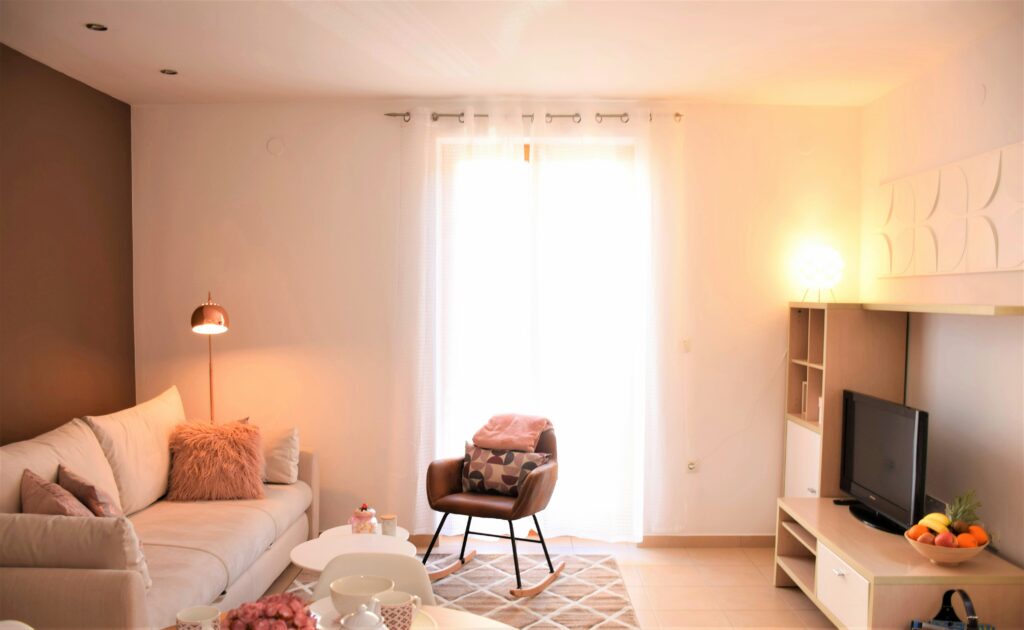
This design trend strips the living room down to what matters, but without sacrificing comfort. Think clean lined sofas in plush bouclé, tapered wood chairs with just the right amount of curve, and low profile coffee tables that don’t beg for attention. The goal? A room that feels light not just visually, but emotionally.
Negative space pulls its weight here. Instead of filling every corner, the approach leaves breathing room. A softer layout means the eye can rest, and so can you. Nothing feels crowded, and everything is selected with intention.
Color palettes stay quiet. Creams, soft grays, and muted beiges dominate, setting a backdrop for organic shapes rounded armrests, pebble shaped ceramic pieces, and the occasional arched floor lamp. It all works together to create a setting that calms without being cold. Because minimal doesn’t mean sterile. It means smart, deliberate, and grounded in comfort.
Earth Inspired Palettes
Bold isn’t always bright. In 2026, living rooms are calming down. Clay, terracotta, olive, and taupe have stepped into the spotlight not as accents, but as the foundation. These earthy tones have weight. They don’t shout for attention, but they hold the space with certainty. They tell you: this is a room you can breathe in.
Used right, they form a palette that looks effortless and lived in. A taupe wall sets the tone. Olive cushions. Terracotta vases. Clay toned rugs. The result? Warmth and depth without visual clutter. These palettes feel timeless because they pull from what’s already grounded in nature.
This earthy approach works across the board. Open floor plans get a cohesive, flowy feel. Smaller apartments benefit too these muted tones create illusion of space without the coldness of stark white. Add in natural textures like linen, jute, or raw wood, and the whole room feels anchored and inviting.
The best part? It’s low maintenance, high impact, and doesn’t ask for constant trend chasing. Just a solid, honest canvas to build your living space on.
Smart Tech Integration
Modern comfort goes beyond furniture choices today’s living rooms embrace seamless technology to enhance relaxation, reduce clutter, and add functionality without sacrifice.
Invisible Tech, Visible Comfort
Technology becomes truly luxurious when you don’t have to think about it. Designers are embedding smart features directly into furniture and finishes:
Hidden speakers blend into walls or ceilings for immersive audio without bulky equipment
Wireless charging surfaces built into side tables and consoles keep devices powered without visible cords
Smart lighting systems that adjust brightness and tone based on time of day or mood presets
Redefining Comfort Through Automation
Integrated smart systems allow you to personalize your space with ease. Comfortable living now includes:
Voice activated light zones for reading, entertaining, or winding down
Climate controls that learn your preferences to maintain ideal temperatures all day
Remote control blinds for natural light management without getting off the couch
Clean Aesthetics, Calmer Spaces
The real beauty of smart tech integration lies in its ability to simplify not complicate:
Clutter free design: hidden wires and unified control reduce visual busyness
Streamlined surfaces: fewer visible controls mean more focus on design elements
Technology as background: enhancements support the experience, never dominate it
Smart innovation supports a deeper sense of ease, making your living space feel both tranquil and tailored.
Elevated Small Space Layouts
Designing for limited square footage doesn’t mean you have to compromise on style or comfort. Modern living room layouts are proving that even the coziest corners can feel expansive and functional when designed with purpose.
Smart Storage Meets Style
Optimizing space begins with furniture that does more than one job. Look for built in storage or modular systems that blend into the room’s aesthetic while keeping things clutter free.
Wall mounted shelving or media units to open up floor space
Sofas and ottomans with hidden compartments
Coffee tables that offer storage or convert into work surfaces
Defining Space With Subtle Boundaries
In a small living room, layout is everything. Use intentional zoning to separate functions like lounging, working, or hosting without using walls.
Layered lighting: Use a mix of ceiling, wall, and floor lamps to shape each area’s mood
Area rugs: Visually carve out space for seating or work zones
Furniture arrangement: Anchor the room by placing main seating away from walls
Want to dive deeper? Discover more creative layout strategies: How to Transform Small Spaces with Creative Layouts
Small spaces don’t need to feel small. With multi functional pieces and strategic zoning, your living area becomes a highly personalized and efficient retreat.
Layered Textures and Fabrics
Mixing linen, velvet, raw wood, and matte finished metals isn’t about showing off it’s about grounding your space without making it feel flat. Texture layering adds instant depth. It gives your eyes something to rest on, your hands something to feel, and it makes your living room look lived in without losing its edge.
This trend isn’t boxed into a single design direction either. It slips effortlessly into Scandinavian restraint, plays well with Japandi’s warmth and simplicity, and thrives in eclectic rooms where contrast is king. Think of a walnut coffee table, linen drapes, a velvet accent chair, and just a hint of brushed steel. It’s not overload it’s balance, carefully done.
When the palette stays neutral, textures do the talking. That’s the trick: let materials bring the comfort, not just cushions.
Nature First Design

Biophilic design isn’t just a buzzword it’s showing up in real living rooms everywhere. Indoor olive trees, vertical moss art, and expanded window designs are becoming staples of modern interiors. The idea is simple: bring the outside in. These natural details don’t just look good, they also have a practical edge improving mood, reducing stress, and enhancing air quality without relying on tech.
Natural light plays a central role here. More homes are being designed or renovated with larger windows or skylights that flood living spaces with daylight. This aligns well with sustainability goals, cutting down the need for artificial lighting during daytime hours. From a style standpoint, the mix of nature and clean design lines hits that balance rooted, but contemporary.
In 2026, comfort means conscious choices. Biophilic touches remind us that calm and beauty don’t need to come at the planet’s expense.
Curved Geometry
Modern living rooms are moving away from rigid lines and hard edges. Curved design elements bring in a sense of softness and sophistication that feels distinctly human. This trend embraces flow visually and emotionally to create spaces that feel more approachable and comfortable.
Why Curves Matter
Curves do more than look elegant they enhance the entire living experience by creating natural, inviting movement throughout a space.
Offer a sense of continuity and openness
Soften the overall appearance, reducing visual tension
Help foster a calming and inclusive feel
Elements to Feature
To incorporate this look, start with statement pieces that anchor the room while maintaining a gentle silhouette:
Curved Sofas: Cocoon like and perfect for conversation areas
Rounded Coffee Tables: Break up boxy layouts and add visual interest
Arched Floor Lamps: Provide ambient light with a sculptural edge
Best for Open Layouts
Curved geometry especially shines in larger, open plan spaces. It subtly defines zones without obstructing flow, making it ideal for modern homes that blend living, dining, and work areas.
Enhances transitions between areas
Supports organic movement across shared spaces
Keeps the room feeling fresh and modern without harsh corners
Statement Lighting
Lighting isn’t just functional anymore it’s a sculptural, mood setting anchor in the modern living room. Oversized pendant lamps float over coffee tables like art installations. Sculptural floor lights bend, arc, or spike into the room with confidence. These aren’t background pieces. They grab attention and hold it.
Aside from form, tech is pushing the envelope. LED setups offer color tuning, dimming, and zoned control that lets you shift the vibe from midday clarity to evening calm with a tap. The result: lighting that’s just as dynamic as your day, and twice as expressive.
Statement lighting doesn’t just illuminate a room it defines it.
Color Blocking with Purpose
Color blocking is no longer just a fashion statement it’s a powerful tool in modern interior design that brings energy, structure, and personal touch to a living room. When used purposefully, it transforms open plan layouts into dynamic, zoned environments without the need for physical dividers.
Bold Choices for Visual Impact
Incorporating bold blocks of color using paint, tile, textiles, or even furniture helps establish focal points and injects personality into a room.
Use painted accent walls or color dipped ceilings to ground large spaces
Incorporate bold textiles like patterned rugs or colored throws for pop and warmth
Try colored tile or backsplashes in open concept living/kitchen areas
Structuring Open Layouts
Color blocking is an excellent strategy for giving shape to open layouts. It provides visual cues that subtly divide the space without interrupting flow.
Use contrasting color blocks to define where the living zone ends and the workspace begins
Coordinate hues with lighting placement to further emphasize different zones
Pair with area rugs or changes in material underfoot for a layered look
Personality Meets Practicality
Beyond aesthetics, intentional color choices can evoke specific moods or reflect your lifestyle. Whether you prefer earth tones for grounding and calm, or vibrant hues for energy and creativity, color blocking lets you design a space that feels uniquely yours.
Soft palettes for relaxing lounge zones
Rich colors like navy or emerald to create focused workspaces
Combining color with texture (matte, glossy, woven) to deepen the effect
Personalized Comfort Zones
The living room is no longer just a place to sit it’s how you reset. In 2026, comfort starts with responsiveness. Modular sofas that adapt to movie nights, naps, or impromptu work calls. Deep, no rush lounging chairs built for lingering. And lighting that shifts with the time of day or your mood bright and functional in the morning, soft and ambient after hours.
Design is drifting toward purposefully flexible pieces that support both solitude and connection. Think reading in silence on one side of the room while a small group hangs out on the other each zone distinct but in harmony. These aren’t just furniture choices; they’re design cues that offer both physical ease and mental clarity.
By setting boundaries with intent through layout, lighting, and material your living room becomes a sanctuary by design, not just by default. Retreat or entertain. Soften the edges or open the space. The tools are there. The only rule: build what feels like home.
 Venusrah Greebelt is the kind of writer who genuinely cannot publish something without checking it twice. Maybe three times. They came to home maintenance essentials through years of hands-on work rather than theory, which means the things they writes about — Home Maintenance Essentials, DIY Projects and Ideas, Sustainable Living Solutions, among other areas — are things they has actually tested, questioned, and revised opinions on more than once.
That shows in the work. Venusrah's pieces tend to go a level deeper than most. Not in a way that becomes unreadable, but in a way that makes you realize you'd been missing something important. They has a habit of finding the detail that everybody else glosses over and making it the center of the story — which sounds simple, but takes a rare combination of curiosity and patience to pull off consistently. The writing never feels rushed. It feels like someone who sat with the subject long enough to actually understand it.
Outside of specific topics, what Venusrah cares about most is whether the reader walks away with something useful. Not impressed. Not entertained. Useful. That's a harder bar to clear than it sounds, and they clears it more often than not — which is why readers tend to remember Venusrah's articles long after they've forgotten the headline.
Venusrah Greebelt is the kind of writer who genuinely cannot publish something without checking it twice. Maybe three times. They came to home maintenance essentials through years of hands-on work rather than theory, which means the things they writes about — Home Maintenance Essentials, DIY Projects and Ideas, Sustainable Living Solutions, among other areas — are things they has actually tested, questioned, and revised opinions on more than once.
That shows in the work. Venusrah's pieces tend to go a level deeper than most. Not in a way that becomes unreadable, but in a way that makes you realize you'd been missing something important. They has a habit of finding the detail that everybody else glosses over and making it the center of the story — which sounds simple, but takes a rare combination of curiosity and patience to pull off consistently. The writing never feels rushed. It feels like someone who sat with the subject long enough to actually understand it.
Outside of specific topics, what Venusrah cares about most is whether the reader walks away with something useful. Not impressed. Not entertained. Useful. That's a harder bar to clear than it sounds, and they clears it more often than not — which is why readers tend to remember Venusrah's articles long after they've forgotten the headline.